C5 Hydrocarbon Resin
C5 Hydrocarbon Resin
CAS NO.: 64742-16-1
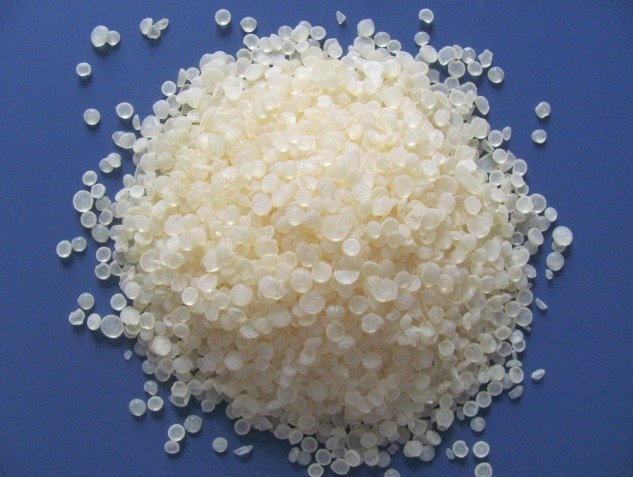
C5 hydrocarbon resin, also known as petroleum resin, is a non -toxic substance in granular form, with a color close to light yellow. It isn't a high polymer but a low polymer with the molecular weight between 300-3000. Featured by acid value, easy mutual solubility, resistant to water, resistant to ethanol and chemicals. It has the chemical stabilizing property to acid and alkaline, viscosity adjusting and thermal stabilizing. C5 resins are mainly used as tackifiers in adhesives (e.g. hot melt, pressure-sensitive adhesives, etc.), and also in road marking paints and rubber products, coating(especially traffic paint), printing ink, paper, etc.
Basic information
Chemical Name: C5 Hydrocarbon Resin
CAS No.: 64742-16-1
EINECS No.: 265-116-8
Specification
Appearance | Light yellow granular |
Softening point (℃) | 98-102 |
Color number(Ga) | 4 ~ 6 |
Acid value (%) | 0.5 max |
Iodine value (mg BR/100g) | 20~45 |
Insolubles acuities(%) | 0.1 max |
Ash(%) | 0.1 max |
Bromine value (g Br/100g) | 70 max |
Viscosity (190 ℃,MPa. S) | 1500~3000 |
Fire Point (℃) | 260 |
Typical Properties
Insoluble in water, ketone solvents, and glycol solutions, but it has very good solubility in aromatic hydrocarbons, esters, and chlorinated solvents such as chloroform. It benefits from excellent flexibility and adhesion properties. C5 petroleum resin belongs to the category of aliphatic resins with low molecular weight, capable of providing good chemical stability in acidic and alkaline environments, and can be blended with C9 petroleum resin.
Packing
In 25 kgs kraft paper bags, 500 kgs or 1,000 kgs jumbo bag
Application
Adhesives: Used as a tackifier in hot melt adhesives, pressure-sensitive adhesives, and solvent-based adhesives.
Coatings: Used in the production of coatings for automotive, construction, and industrial applications, due to its excellent adhesion and compatibility with other materials.
Rubber: Used as a processing aid and tackifier in the production of rubber products, such as tires, hoses, and belts.
Printing inks: Used as a resin in the production of printing inks, due to its excellent compatibility with pigments and other additives.